The ritual
Wai khru and ram muay
What the bow, the slow dance, the headband and the music mean at a Muay Thai fight, in the order you will see them at a Patong stadium.
Book your ringside seat ↗Quick answer
Before a bout, each fighter performs the wai khru and ram muay: a bow of thanks to the teacher, then a personal dance in the ring, to music. Many wear a mongkhon headband and pra jiad armbands. Tradition links its movements to Hanuman, and they often reveal who trained the fighter. It is brief and sets the tone for the bout.
What the words mean
Wikipedia explains that wai is the Thai greeting of pressed palms, a sign of respect, and khru is the Thai form of the Sanskrit word guru, meaning teacher. Ram means dancing in the classical style and muay means boxing. The full term can be read as a war dance saluting the teacher, though Thai speakers usually shorten it to wai khru or ram muay. It is a thank-you before it is a performance.
Where it comes from
Wikipedia says Muay Thai was never only combat: it was tied to religious belief and cultural practice, and early fighters asked monks for blessings and protection before battle. That practice gradually became the wai khru, and as Muay Thai moved from battlefield tactics to sport, the spiritual side stayed, shifting from a link with spirits to a link with teachers and trainers. In the days when fighters fought in front of royalty, the ram muay also paid respect to the king. Today it is a moment of respect and gratitude toward teachers, parents and ancestors.
Around the ring
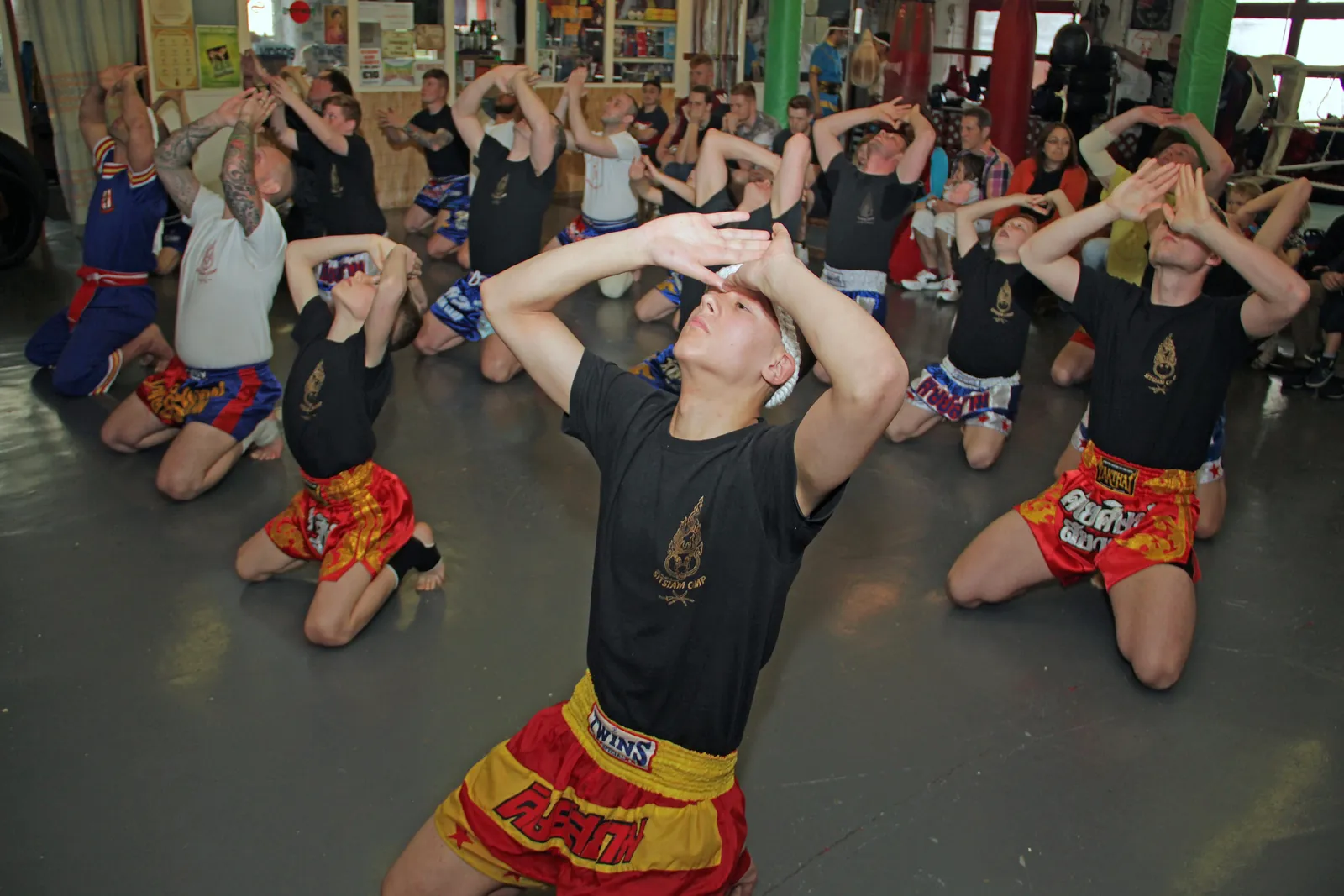
On entering the ring, Wikipedia says, fighters circle it counter-clockwise and pray at each corner. At every corner they lower the head three times, honouring the Buddha, his teachings and the community of monks. This part is the wai khru. Only then do they begin the ram muay. At a stadium you will see it before each bout, so a card of several fights has several rituals.
The ram muay
Each fighter's ram muay is personal and can be simple or intricate. Wikipedia says its movements are said to come from Hanuman and that it often gives clues to the fighter's teacher and region. Music accompanies it, giving the steps their rhythm. Watch how a fighter finishes the dance: the slow, practised steps are the calm before the fight.
The mongkhon and pra jiad
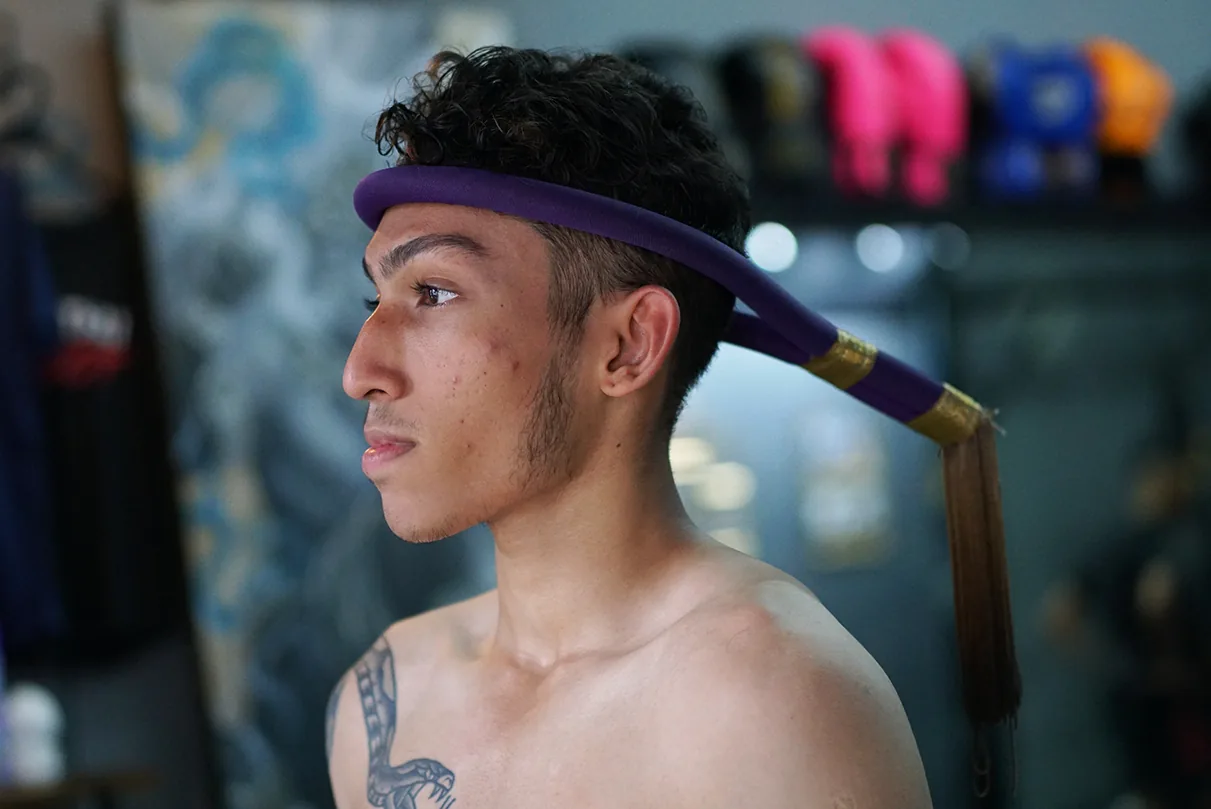
Fighters often walk in wearing a mongkhon headband and pra jiad armbands. Wikipedia says they date from times of constant war, when young men tore a strip from a loved one's clothing, often a mother's sarong, to bring luck and keep harmful spirits away. Today the headband honours a fighter's gym. A trainer hands it over once he thinks the fighter is ready, and often lifts it off after the wai khru to leave it in the corner.
The music
The song that accompanies the ritual is called sarama. Wikipedia says up to four musicians play it: a pi player, a pair of klong khaek drummers and a cymbal player. The pi is a reed instrument like an oboe, the klong khaek are lace drums and the cymbals are the ching. During the ram muay the tempo starts slow and stately, then speeds up when the fight begins and matches the intensity of the audience and the action.
How to watch it
Stay in your seat and keep the noise down while the ritual runs. The booking for the Patong fight night asks guests to respect the fighters and Muay Thai traditions during the event. If you take photos, do it without blocking others. The ritual is brief, so arriving early enough to see the first one is worth it: it is the clearest sign that you are watching a tradition, not a show.
Who this isn't for
Someone who wants only the fighting may feel the ritual is a delay. It is short, and the music helps, but it is not entertainment in the cabaret sense. Equally, nothing about it is a performance for the audience's sake: it is a fighter's private ceremony, carried out in public. Skip a front-row seat if you want to see the whole choreography, because the raised seats give a wider view.
Frequently asked questions
What does wai khru mean?
Wai khru means a salute to the teacher. Wikipedia says wai is the Thai greeting with palms together and khru is the Thai form of guru.
What is the mongkhon?
A headband worn into the ring. Wikipedia says it began as luck and protection and is now a tribute to the fighter's gym.
Why do fighters bow three times in each corner?
Wikipedia says the bows salute the Buddha, the Dharma and the Sangha of monks.
What is sarama?
The music that accompanies the ritual, played on a pi, a pair of klong khaek drums and cymbals, starting slow and then speeding up.
Does every fighter do it?
Wikipedia describes it as a ritual performed by participants before fighting in Muay Thai competitions.
Sources